
 EN
EN English
 Español
 عربى
عربى русский
An air conditioner compressor is the heart of any air conditioning system — a motorized pump that pressurizes refrigerant gas, raising its temperature so it can release heat to the outside air. Without a functioning compressor, an air conditioner cannot move heat and will blow nothing but uncooled air. The compressor is located in the outdoor unit of central AC systems and is typically the most expensive single component to replace, with costs ranging from $800 to $2,800 installed depending on type and system size.
Content
- 1 What Does an Air Conditioner Compressor Do?
- 2 Types of Air Conditioner Compressors
- 3 AC Compressor Types Compared
- 4 Where Is the AC Compressor Located?
- 5 Signs Your Air Conditioner Compressor Is Failing
- 6 What Causes Air Conditioner Compressor Failure?
- 7 Repair vs. Replace: How to Decide When the Compressor Fails
- 8 How to Extend the Life of Your Air Conditioner Compressor
- 9 How Compressor Type Affects Energy Bills: Single-Speed vs. Inverter
- 10 Frequently Asked Questions About Air Conditioner Compressors
- 10.1 Q: How long does an AC compressor last?
- 10.2 Q: Can I run my AC if the compressor is failing?
- 10.3 Q: Is a compressor the same as a condenser?
- 10.4 Q: Why does my AC compressor make a loud noise on startup?
- 10.5 Q: What is the difference between a single-stage and two-stage compressor?
- 10.6 Q: Does the AC compressor run during heating mode on a heat pump?
- 10.7 Q: Can I replace just the compressor, or do I need a whole new outdoor unit?
- 11 Summary: Key Facts About the Air Conditioner Compressor
What Does an Air Conditioner Compressor Do?
The AC compressor performs one essential job: it compresses low-pressure refrigerant vapor into high-pressure, high-temperature vapor. This compression is the critical step that makes the entire refrigeration cycle possible. Here is how the compressor fits into the full cooling process:
- Step 1 — Evaporation (indoors): Liquid refrigerant flows through the indoor evaporator coil, absorbs heat from indoor air, and evaporates into a low-pressure vapor. This is what makes your indoor air feel cool.
- Step 2 — Compression: The low-pressure vapor travels to the compressor in the outdoor unit. The compressor squeezes it, raising its pressure from roughly 60–70 PSI to 200–400 PSI and its temperature from approximately 40°F (4°C) to 160°F (71°C) or higher.
- Step 3 — Condensation (outdoors): The hot, high-pressure vapor moves to the outdoor condenser coil, where a fan blows ambient air across it. The refrigerant releases its heat to the outside air and condenses back into a liquid.
- Step 4 — Expansion: The liquid refrigerant passes through an expansion valve, which drops its pressure rapidly, cooling it dramatically before it re-enters the indoor evaporator coil to begin the cycle again.
The compressor is the only part of this cycle that consumes significant electrical energy — it accounts for 80–90% of the total power draw of a central air conditioning system. A 3-ton residential AC unit typically has a compressor drawing 3,500 to 5,000 watts during operation.
Types of Air Conditioner Compressors
There are five main types of AC compressors used in residential and commercial systems, each with different mechanisms, efficiency levels, and ideal applications.
1. Reciprocating (Piston) Compressor
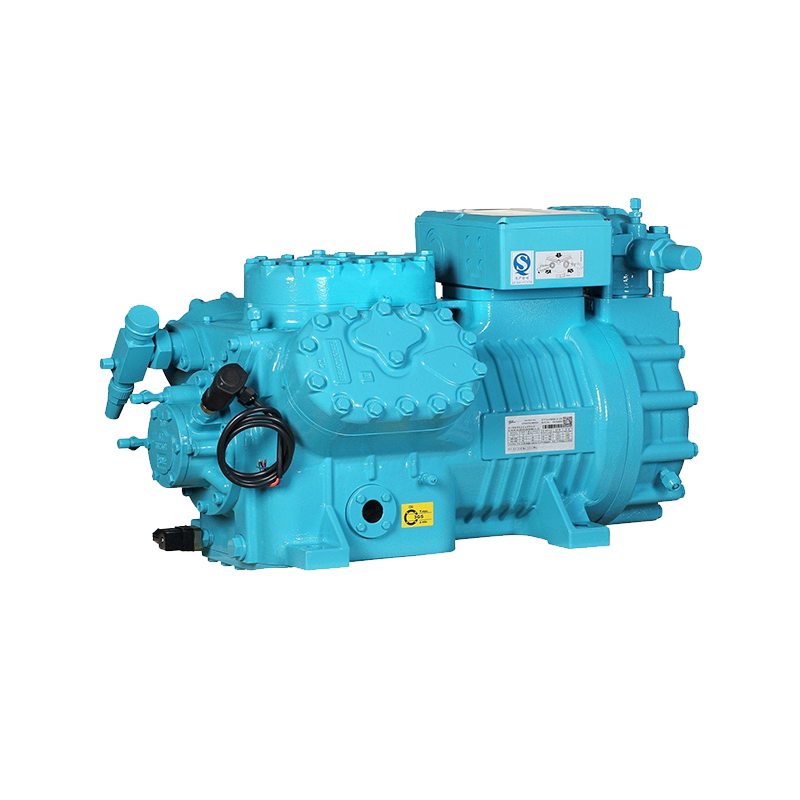
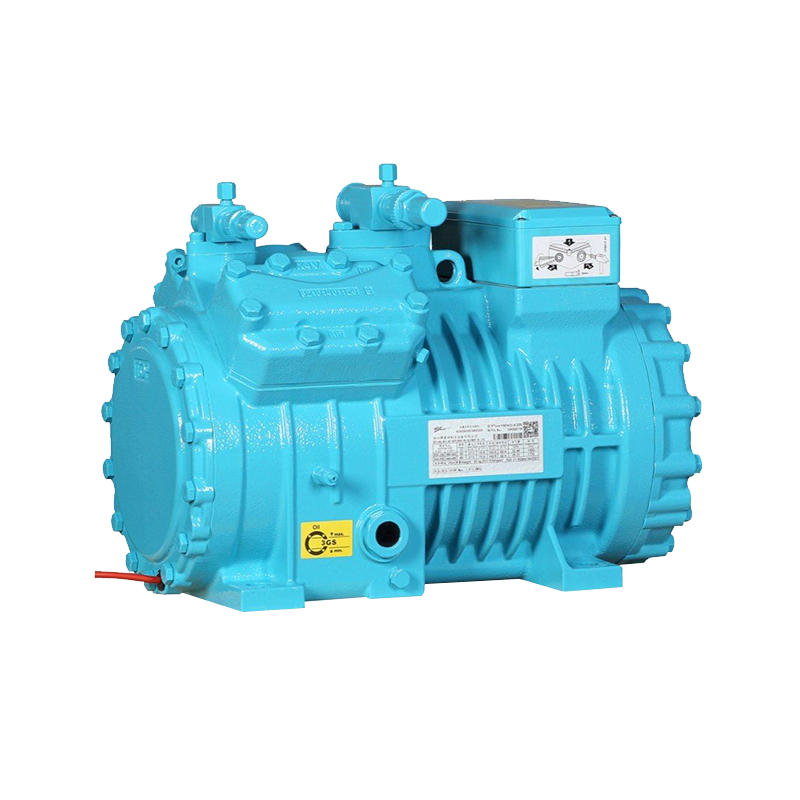
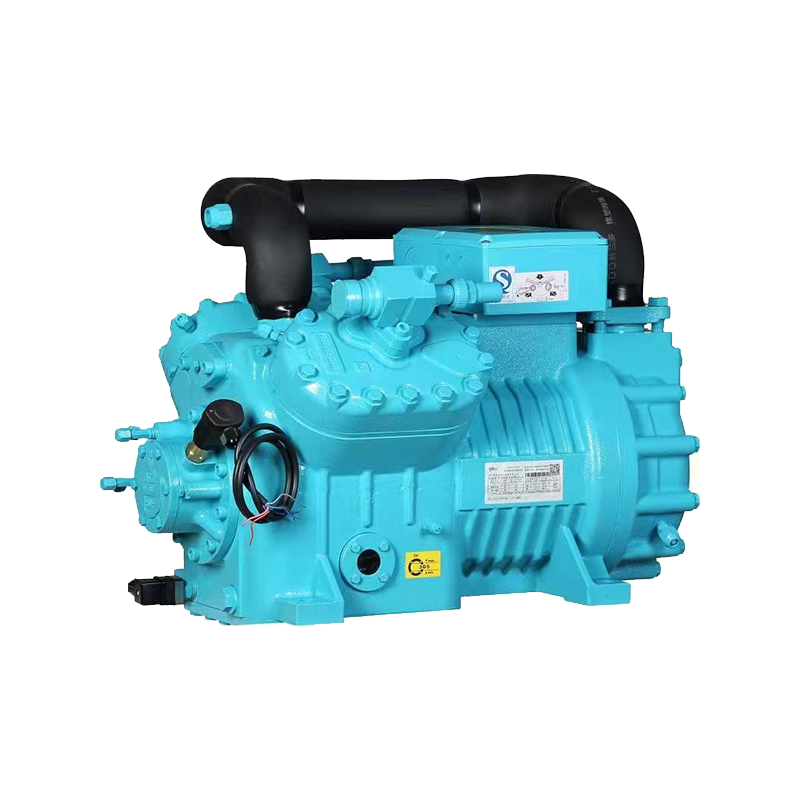
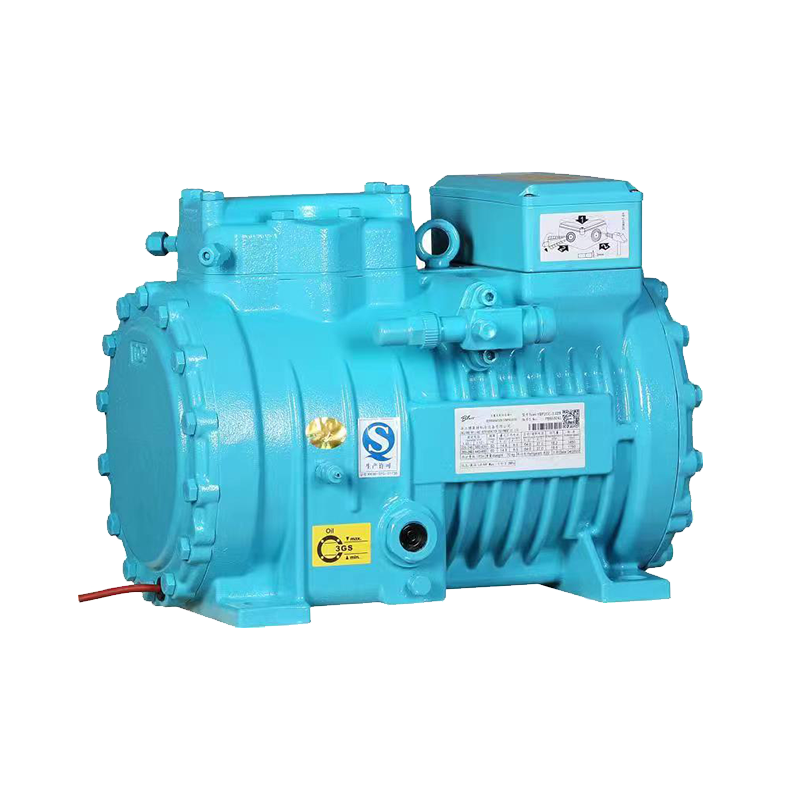
The reciprocating compressor is the oldest and most mechanically straightforward type, using a piston driven by a crankshaft to compress refrigerant — exactly like a car engine cylinder. It draws refrigerant vapor into a cylinder on the downstroke, then compresses it on the upstroke and forces it out at high pressure. Reciprocating compressors can be found in units ranging from 1 ton to 10+ tons, are highly durable, and are widely serviceable. However, they operate at a fixed speed, which makes them less energy-efficient than newer variable-speed alternatives.
Best for: Budget-friendly residential units, older system replacements, and applications where serviceability matters more than peak efficiency.
2. Rotary Compressor
A rotary compressor uses an eccentric roller rotating inside a cylinder to compress refrigerant. As the roller rotates, it traps refrigerant between the roller and the cylinder wall, progressively reducing the volume and raising the pressure. Rotary compressors are compact, quiet, and vibration-free — making them the dominant choice for window air conditioners, portable ACs, and small mini-splits up to about 2 tons. Their simple construction means fewer moving parts and high mechanical reliability.
Best for: Window units, portable air conditioners, small single-room cooling systems.
3. Scroll Compressor
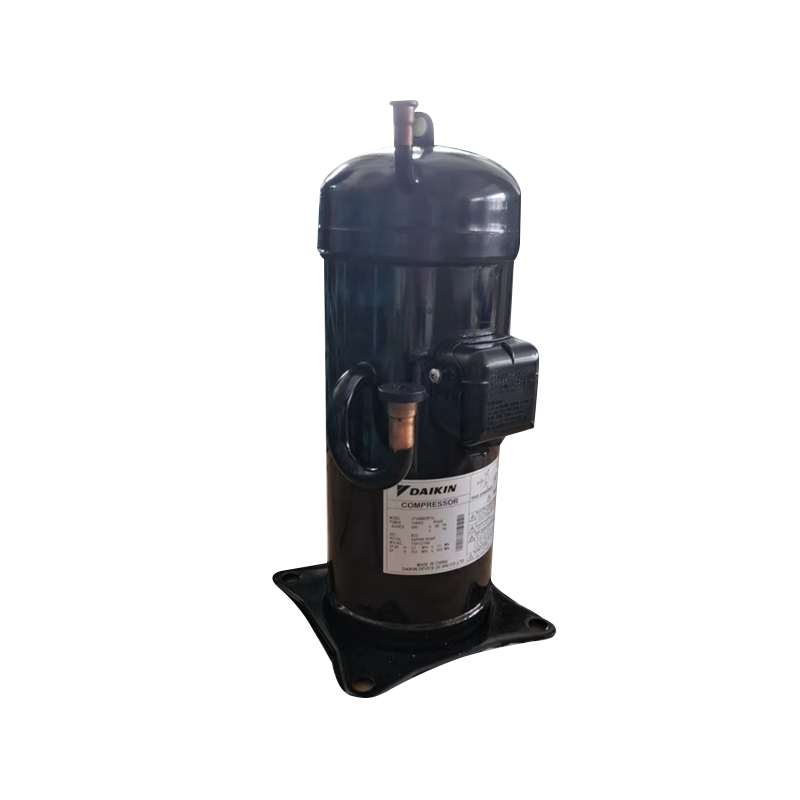
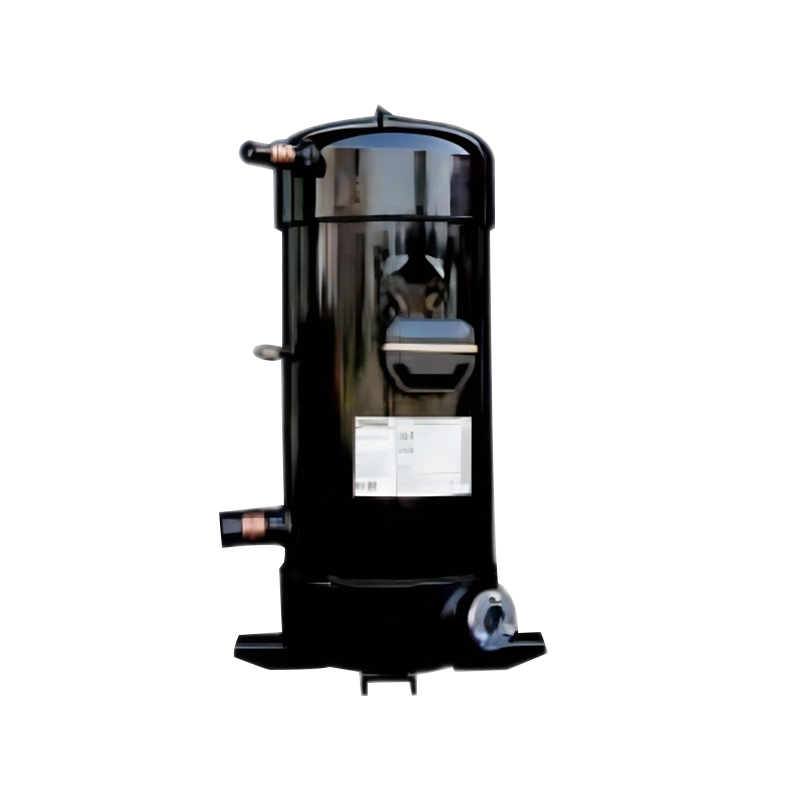
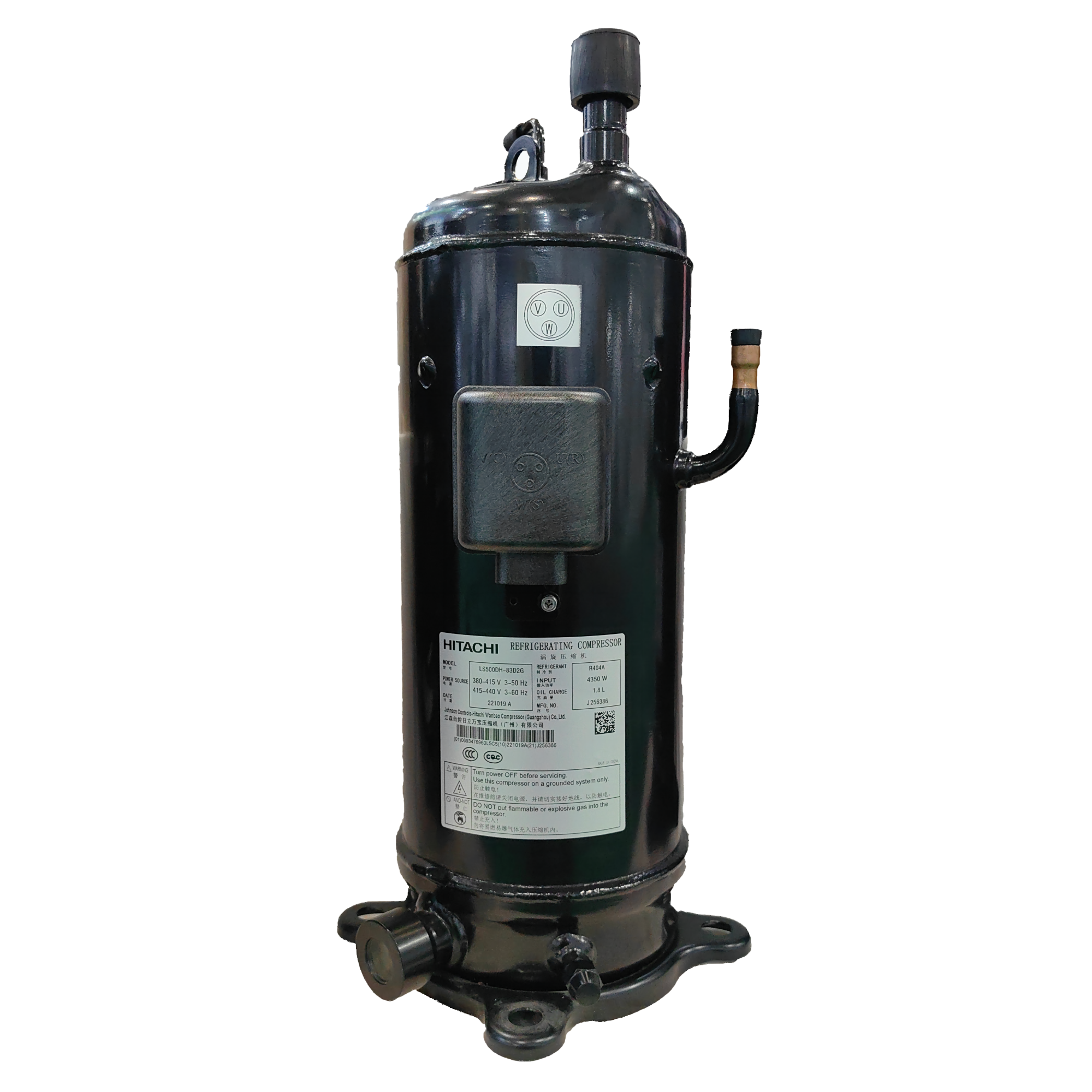
The scroll compressor is the current standard in mid-to-high-end residential central air conditioning. It uses two interlocking spiral scrolls — one fixed, one orbiting — to progressively compress refrigerant toward the center of the spiral. This continuous compression motion produces 30–50% less vibration and noise than reciprocating compressors and achieves higher efficiency due to fewer internal friction losses. Scroll compressors are available in single-speed and two-speed variants and are found in systems rated from 1.5 to 5 tons.
Best for: Mid-range and high-efficiency residential central AC systems, split systems, and light commercial applications.
4. Variable-Speed (Inverter) Compressor
A variable-speed inverter compressor uses electronic motor control to continuously adjust the compressor's operating speed — and therefore its cooling output — in real time to match the exact cooling demand of the space. Instead of cycling on and off at 100% power (as single-speed compressors do), an inverter compressor may run at 30–100% capacity indefinitely, maintaining precise temperature with far less energy waste. Systems with inverter compressors typically achieve SEER ratings of 18–26+, compared to 13–16 SEER for single-speed systems. They also significantly reduce humidity fluctuations and temperature swings.
Best for: Premium efficiency residential systems, ductless mini-splits, and any installation where energy savings and precise temperature control are priorities.
5. Centrifugal Compressor
The centrifugal compressor uses a high-speed impeller to add kinetic energy to refrigerant vapor, which is then converted to pressure in a diffuser. These compressors handle very large volumes of refrigerant and are used exclusively in large commercial and industrial chiller systems — typically those above 100 tons of cooling capacity. They are oil-free, extremely efficient at full load, and can handle refrigerants unsuitable for positive-displacement compressors.
Best for: Large commercial buildings, hospitals, data centers, industrial process cooling.
AC Compressor Types Compared
| Compressor Type | Typical SEER Range | Noise Level | Capacity Range | Lifespan | Relative Cost |
| Reciprocating | 13–16 | High | 1 – 10+ tons | 10–15 years | $ Low |
| Rotary | 10–14 | Low | Up to 2 tons | 8–12 years | $ Low |
| Scroll | 14–20 | Low–Medium | 1.5 – 5 tons | 12–20 years | $$ Medium |
| Variable-Speed (Inverter) | 18–26+ | Very Low | 0.75 – 5 tons | 15–20+ years | $$$ High |
| Centrifugal | 20–30+ | Medium | 100+ tons | 20–30 years | $$$$ Very High |
Table 1: Comparison of the five main air conditioner compressor types across efficiency, noise, capacity, lifespan, and relative cost. SEER values are representative industry ranges.
Where Is the AC Compressor Located?
The air conditioner compressor is always located in the high-pressure side of the refrigerant circuit — and its physical placement depends on the type of AC system:
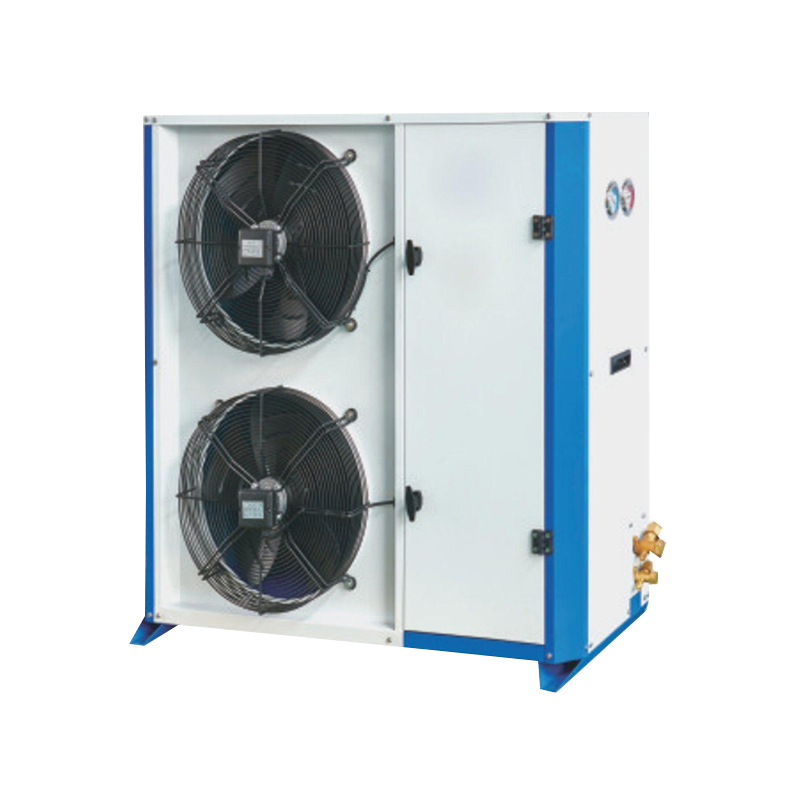
- Central split system: The compressor is housed inside the outdoor condenser unit — the metal cabinet sitting outside your home. It is the largest component inside that cabinet, typically a cylindrical or dome-shaped canister with refrigerant lines connecting to it. You can often hear it hum when the system starts.
- Ductless mini-split: Same as the central split — the compressor is in the outdoor unit. Mini-split outdoor units are smaller than central AC condensers but contain the same compressor, condenser coil, and fan arrangement.
- Window air conditioner: The compressor is in the rear half of the window unit — the section hanging outside the window. This is why window ACs are heavier at the back and must be secured against falling.
- Portable air conditioner: The compressor is inside the portable unit itself, which is why these units generate heat that must be exhausted through the window hose. The compressor accounts for most of the unit's weight — typically 50–80% of total unit mass.
- Packaged unit (rooftop unit): All components including the compressor are in a single outdoor cabinet, typically mounted on a commercial building rooftop or on a ground-level concrete pad.
Signs Your Air Conditioner Compressor Is Failing
Compressor failure is rarely sudden — it typically announces itself with specific, recognizable warning signs. Catching these early can save the compressor or at least allow planned rather than emergency replacement.
- AC not cooling despite running: The most obvious symptom. If the system runs continuously but the indoor temperature does not drop, the compressor may not be building adequate pressure. Check that the outdoor unit fan is spinning and that you can feel warm air being expelled from the top of the outdoor unit — no warm exhaust means the compressor is not operating.
- Loud banging, clanking, or grinding noises: Mechanical noises from the outdoor unit — especially on startup — indicate internal compressor damage: broken valve plates, worn pistons, or a loose internal mounting spring. These sounds require immediate professional inspection.
- Hard starting or system tripping breakers: If the AC trips the circuit breaker repeatedly on startup, the compressor may be drawing excessive locked-rotor amperage due to failing capacitors, refrigerant slugging, or internal winding damage. A hard-start kit can sometimes extend compressor life in these cases.
- Warm air from outdoor unit but AC not cooling: If you can hear the compressor running but indoor temperatures won't drop, suspect low refrigerant charge (a leak), a faulty metering device, or partially failed compressor valves — the refrigerant circulates but doesn't compress efficiently.
- Visible oil or refrigerant stains near outdoor unit: Oily residue around refrigerant line connections or on the compressor housing indicates a refrigerant leak or compressor seal failure — both conditions that accelerate compressor wear dramatically.
- Shaking or vibrating outdoor unit at startup: Some vibration on startup is normal, but excessive shaking that doesn't settle within 10–15 seconds can indicate a failing compressor motor winding or internal mechanical imbalance.
What Causes Air Conditioner Compressor Failure?
Understanding the root causes of AC compressor failure helps homeowners take preventive action and gives context for repair decisions.
| Cause of Failure | How It Damages the Compressor | Prevention |
| Low refrigerant charge (leak) | Compressor overheats; insufficient refrigerant also carries lubricating oil, so the compressor runs without adequate lubrication | Annual refrigerant level check; repair leaks promptly |
| Dirty condenser coils | Blocked airflow raises discharge pressure and temperature, forcing compressor to work harder and overheat | Annual coil cleaning before cooling season |
| Electrical issues (voltage spikes, power surges) | Burns motor windings; the most common cause of sudden compressor failure in lightning-prone regions | Install surge protector rated for AC systems; check capacitors annually |
| Liquid slugging | Liquid refrigerant enters the compressor cylinder (compressors can only compress gas); causes catastrophic valve and piston damage on startup | Maintain correct refrigerant charge; ensure system runs before adding charge |
| Oversized or undersized system | Short-cycling (too large) or continuous overload (too small) both accelerate compressor wear significantly | Manual J load calculation before installation |
| Lack of maintenance | Dirty filters restrict airflow; restricted airflow causes low suction pressure and compressor overheating over time | Replace filters every 1–3 months; schedule annual professional tune-up |
Table 2: Common causes of air conditioner compressor failure, how each damages the compressor, and preventive measures for each scenario.
Repair vs. Replace: How to Decide When the Compressor Fails
When an AC compressor fails, you face a critical decision: repair or replace? The answer almost always comes down to three factors — the age of the system, the cost of compressor replacement relative to a new system, and whether the failed compressor is under warranty.
The 5,000 Rule: A Simple Decision Framework
HVAC professionals commonly use the "$5,000 Rule": multiply the age of the system (in years) by the cost of the repair (in dollars). If the result exceeds $5,000, replace the entire system; if it's below, repair is more economical. For example: a 10-year-old system with a $900 compressor repair = 10 × $900 = $9,000 — over the threshold, suggesting replacement. An 8-year-old system with a $400 capacitor repair = 8 × $400 = $3,200 — below the threshold, suggesting repair.
Compressor Replacement Cost Breakdown
A new AC compressor replacement typically costs between $800 and $2,800 installed, broken down as:
- Compressor part cost: $400–$1,600 depending on type, capacity (tonnage), and whether OEM or aftermarket
- Labor: $200–$600 (2–5 hours of HVAC technician time)
- Refrigerant recharge: $100–$350 depending on refrigerant type (R-410A vs. the newer R-32 or R-454B) and quantity needed
- Additional components: Capacitors, contactor, and filter drier are typically replaced at the same time — add $50–$200
Compare this to a full system replacement: a new 3-ton residential split system costs $3,500–$7,500 installed, which includes a new compressor under full manufacturer warranty (typically 5–10 years on parts, 5 years on labor).
When to Always Replace Rather Than Repair
- The system is 10+ years old — other components (coils, electrical, refrigerant lines) are near end of life
- The system uses R-22 refrigerant (phased out since 2020) — replacement refrigerant is scarce and expensive
- The compressor has a burned motor winding — acid contamination from a burned winding spreads throughout the refrigerant circuit and requires costly system flushing even after compressor replacement
- The compressor is out of warranty and the system is over 8 years old
How to Extend the Life of Your Air Conditioner Compressor
A well-maintained AC compressor in a properly sized system can last 15–20 years. The following maintenance practices directly protect compressor longevity.
- Change air filters every 1–3 months: Dirty filters are the leading cause of restricted airflow, which reduces suction pressure and causes the compressor to overheat. A $5 filter change prevents thousands of dollars in compressor damage.
- Schedule annual professional tune-ups: A trained technician will check refrigerant charge, measure electrical draw (compressor should operate within 10% of nameplate amperage), clean coils, and inspect capacitors and contactors — the most common precursors to compressor failure.
- Keep outdoor unit clear: Maintain at least 18–24 inches of clearance around all sides of the outdoor unit. Vegetation, debris, or fencing that restricts airflow over the condenser coil directly raises compressor discharge temperature and pressure.
- Clean condenser coils annually: A layer of dirt as thin as 0.042 inches (1 mm) on condenser coils can reduce heat transfer efficiency by up to 21%, forcing the compressor to work significantly harder. Rinse coils with a garden hose (never a pressure washer) annually.
- Install a hard-start kit if appropriate: For compressors that struggle to start (especially on older or slightly undersized electrical circuits), a hard-start kit reduces startup electrical stress and can extend compressor life by several years.
- Install a surge protector: A dedicated HVAC surge protector ($50–$150 installed) protects the compressor motor windings from voltage spikes — a common cause of sudden compressor failure during summer storms when grid fluctuations are frequent.
How Compressor Type Affects Energy Bills: Single-Speed vs. Inverter
The efficiency difference between a standard single-speed compressor and a variable-speed inverter compressor is substantial enough to justify the higher upfront cost over a typical system lifespan.
A single-speed compressor operates at 100% capacity whenever it runs, then shuts off completely when the thermostat setpoint is reached. This on-off cycling is inherently wasteful — startup draws 2–3× the normal running current every cycle, and temperature swings of 2–4°F are typical. In a hot climate where the AC runs 8–10 hours per day, a 3-ton single-speed system might cycle on and off 8–12 times per hour, causing significant energy and wear.
An inverter compressor in the same scenario may run at 40–60% capacity continuously, maintaining temperature within ±0.5°F of the setpoint with no cycling losses. Energy savings of 25–40% over a single-speed system are consistently documented in real-world studies. Over a 15-year system lifespan in a region with high cooling loads, this can translate to $3,000–$6,000 in reduced electricity costs — often more than recovering the premium paid for the inverter system.
Frequently Asked Questions About Air Conditioner Compressors
Q: How long does an AC compressor last?
A well-maintained air conditioner compressor lasts 10–20 years on average. Single-speed reciprocating compressors in hot climates that cycle frequently tend toward the lower end (10–12 years). Variable-speed scroll compressors that run continuously at partial load experience less mechanical stress per operating hour and often last 15–20+ years. The biggest determinants of lifespan are proper refrigerant charge maintenance, clean coils, and stable electrical supply.
Q: Can I run my AC if the compressor is failing?
Running an AC with a known failing compressor risks causing additional damage. A compressor with burned motor windings releases acid into the refrigerant circuit, contaminating the entire system — including the indoor coil and metering device. If a compressor is hard-starting, making mechanical noises, or tripping breakers, shut the system down and have it professionally inspected before running it further. The cost of ignoring a failing compressor can double or triple the final repair bill.
Q: Is a compressor the same as a condenser?
No — the compressor and the condenser are two separate components housed together in the outdoor unit. The compressor pressurizes the refrigerant vapor. The condenser coil (the finned copper tubing wrapped around the outside of the cabinet) is where the hot pressurized refrigerant releases its heat to the outside air and condenses into liquid. The "condenser unit" is the name for the entire outdoor cabinet — which contains the compressor, condenser coil, fan, and electrical controls.
Q: Why does my AC compressor make a loud noise on startup?
A brief hum or click on startup is normal — that's the capacitor providing the initial boost to start the compressor motor. However, loud banging, clanking, or grinding on startup indicates internal compressor damage (broken valve plate, loose internal components) or a failed capacitor causing the compressor to struggle to start. A rattling that stops after 10–15 seconds may be a minor issue; any metallic banging that persists warrants immediate professional inspection.
Q: What is the difference between a single-stage and two-stage compressor?
A single-stage compressor operates at only one speed — 100% capacity — and cycles on and off to regulate temperature. A two-stage compressor has two operating speeds: typically 65% and 100% of full capacity. It runs at low stage during mild conditions (the majority of the cooling season) and switches to high stage only during peak heat. Two-stage systems are significantly more efficient than single-stage, with better humidity control, but less efficient and less precise than fully variable-speed inverter compressors.
Q: Does the AC compressor run during heating mode on a heat pump?
Yes — in a heat pump, the compressor runs in both cooling and heating modes. In heating mode, the refrigerant cycle is reversed: the outdoor coil absorbs heat from outside air (even in cold weather), and the compressor pressurizes that heat so it can be released indoors. Heat pump compressors therefore accumulate more operating hours per year than cooling-only AC compressors — a factor to consider when estimating lifespan and maintenance needs. Most modern heat pump compressors are designed with this dual-season use in mind.
Q: Can I replace just the compressor, or do I need a whole new outdoor unit?
In most cases, replacing just the compressor is technically possible but may not be advisable. If the system is under 8 years old and the compressor failed due to an isolated cause (such as a voltage surge), replacing only the compressor makes sense. If the failure involved a burned motor (acid contamination of the system), or if the system is older, replacing the entire outdoor unit ensures that no contaminated components remain and that the new compressor is matched to fresh coil and metering components. Always ask your technician to check whether refrigerant type compatibility and system matching make whole-unit replacement the more cost-effective path.
Summary: Key Facts About the Air Conditioner Compressor
The air conditioner compressor is the engine of your cooling system — pressurizing refrigerant to make heat transfer possible. Here are the most important takeaways:
- It accounts for 80–90% of an AC system's energy consumption and is the most expensive component to replace.
- Five main types exist: reciprocating, rotary, scroll, variable-speed inverter, and centrifugal — each suited to different applications and budgets.
- Variable-speed inverter compressors save 25–40% in energy costs compared to single-speed models and last longer due to reduced mechanical stress.
- Most failures are preventable: annual tune-ups, filter changes, clean coils, and proper refrigerant charge maintenance are the most impactful protective actions.
- When a compressor fails, use the $5,000 Rule and system age to decide between repair and full replacement.
- A well-maintained compressor in a properly sized system can reliably last 15–20 years.
 +86-0574-88198229
 +86-17757487298
 Zhejiang Province, Ningbo City, Yinzhou District