
 EN
EN English
 Español
 عربى
عربى русский
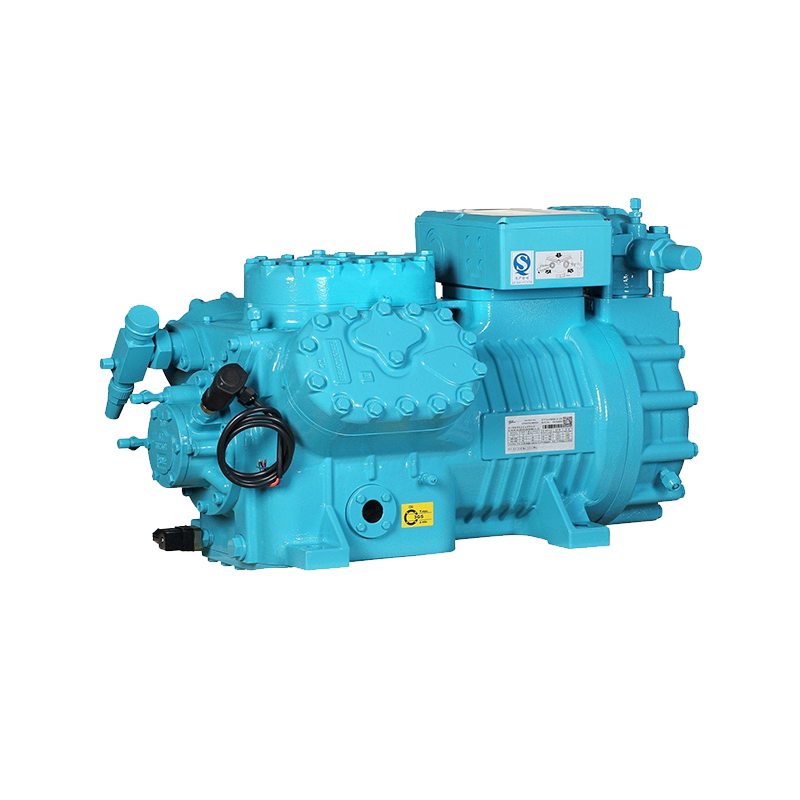
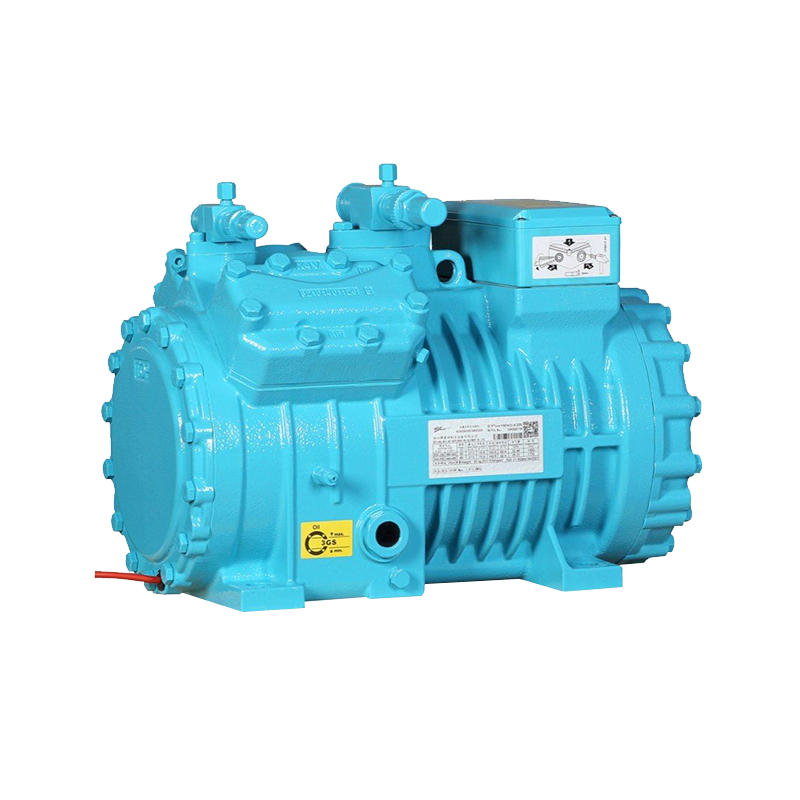
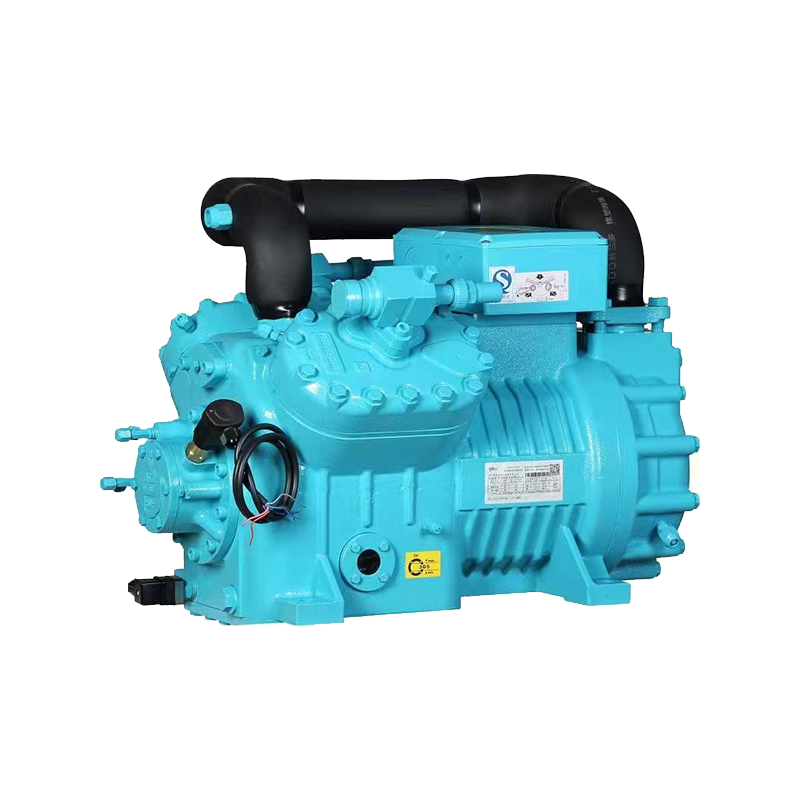
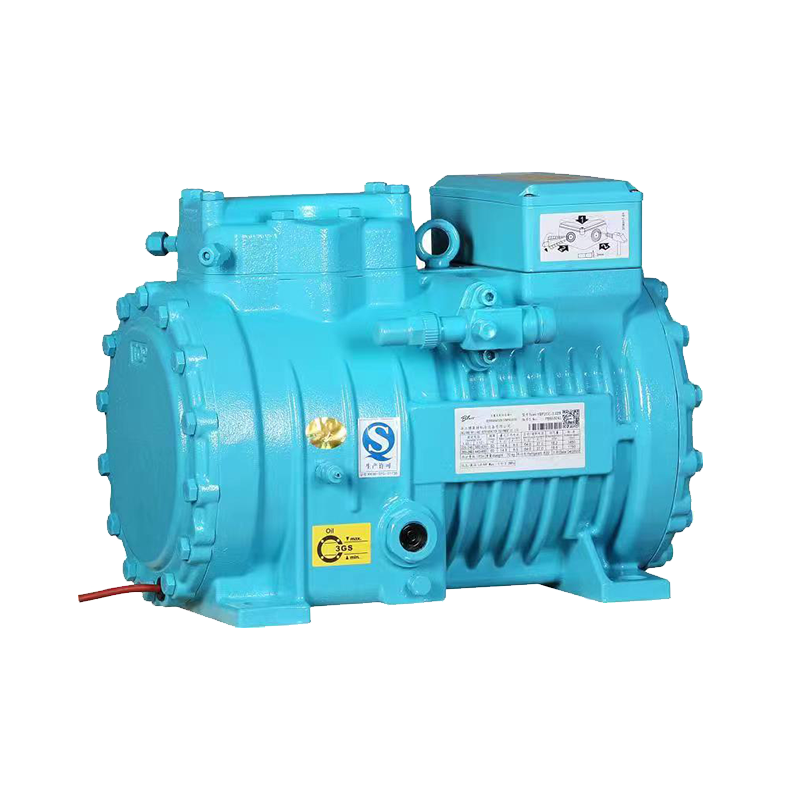
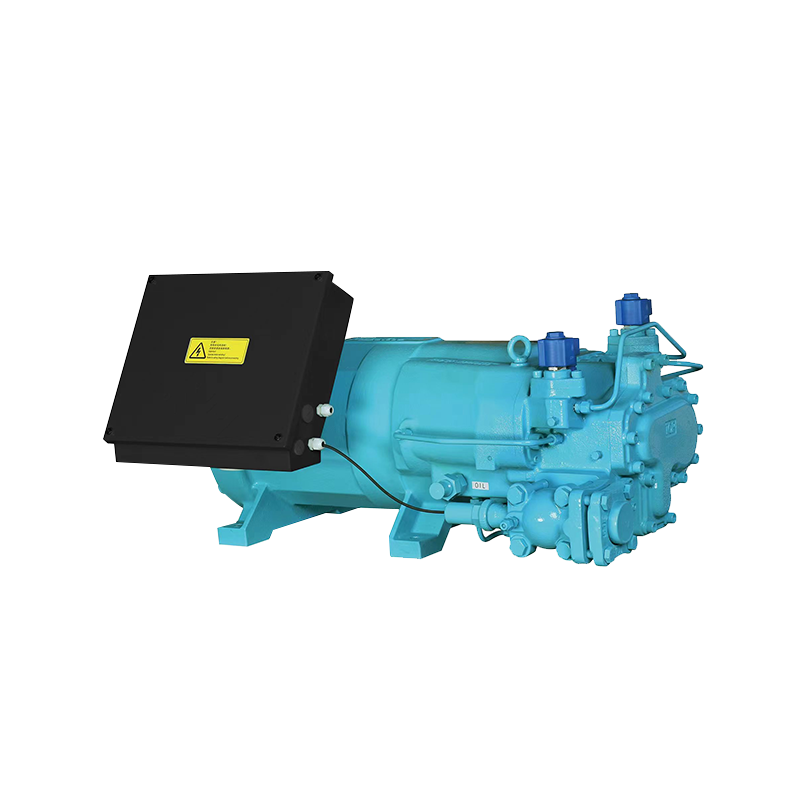
The compressor in an HVAC system pressurizes low-pressure refrigerant gas coming from the evaporator and raises it to a high-pressure, high-temperature state so it can release heat through the condenser and continue the refrigeration cycle. Without the compressor, there is no refrigerant circulation, no heat transfer, and no cooling or heating — it is the mechanical heart of every air conditioning and heat pump system. Understanding what the HVAC compressor does, how it works, and what causes it to fail can save thousands of dollars in avoidable repairs and help you make smarter decisions when buying or maintaining an HVAC system.
Content
- 1 1. The Role of the Compressor in the HVAC Refrigeration Cycle
- 2 2. How an HVAC Compressor Works Step by Step
- 3 3. Types of HVAC Compressors
- 4 4. Compressor Role in Cooling vs Heating Mode
- 5 5. Signs Your HVAC Compressor Is Failing
- 6 6. Common Causes of HVAC Compressor Failure
- 7 7. How to Extend HVAC Compressor Life
- 8 8. Compressor Replacement vs Full System Replacement
- 9 9. Comparison Tables
- 10 10. Frequently Asked Questions
- 11 Key Takeaways: What the HVAC Compressor Does and Why It Matters
1. The Role of the Compressor in the HVAC Refrigeration Cycle
The HVAC compressor is the engine that keeps refrigerant moving through the system by converting low-pressure vapor into high-pressure, high-temperature gas — the essential first step in moving heat from inside a building to the outside. Every other component in the refrigeration cycle depends on the pressure differential that the compressor creates.
The refrigeration cycle consists of four stages, and the compressor drives the transition between the first and second:
- Evaporation: Liquid refrigerant absorbs heat from indoor air inside the evaporator coil and evaporates into a low-pressure gas at roughly 40 to 50 degrees Fahrenheit (4 to 10 degrees Celsius). This is what cools your indoor air.
- Compression: The compressor draws in this low-pressure gas and compresses it, raising both pressure and temperature dramatically — often to 100 to 150 psi and 150 to 180 degrees Fahrenheit (65 to 82 degrees Celsius) depending on the refrigerant type.
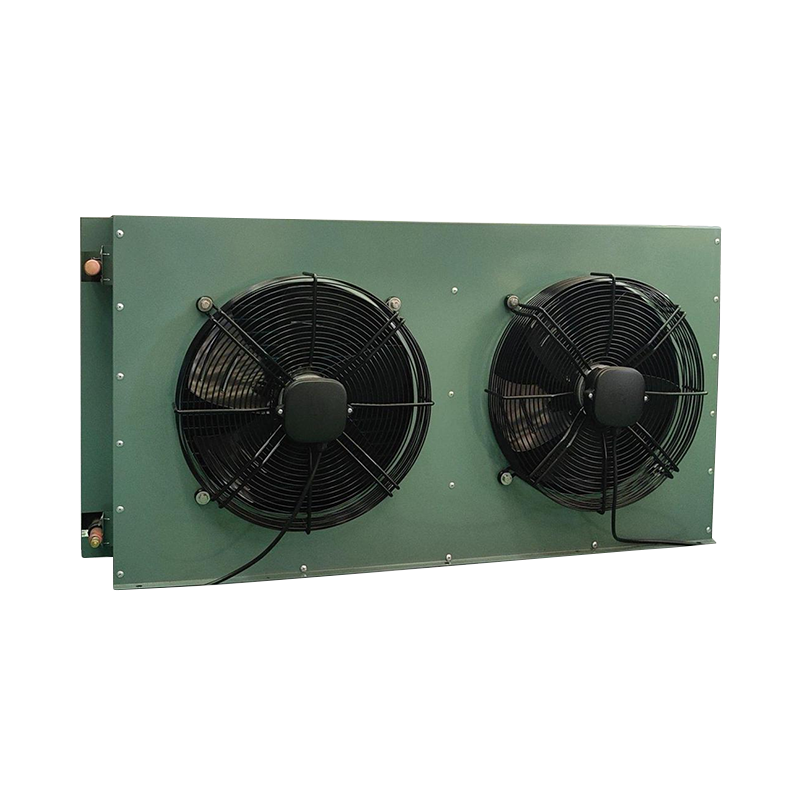
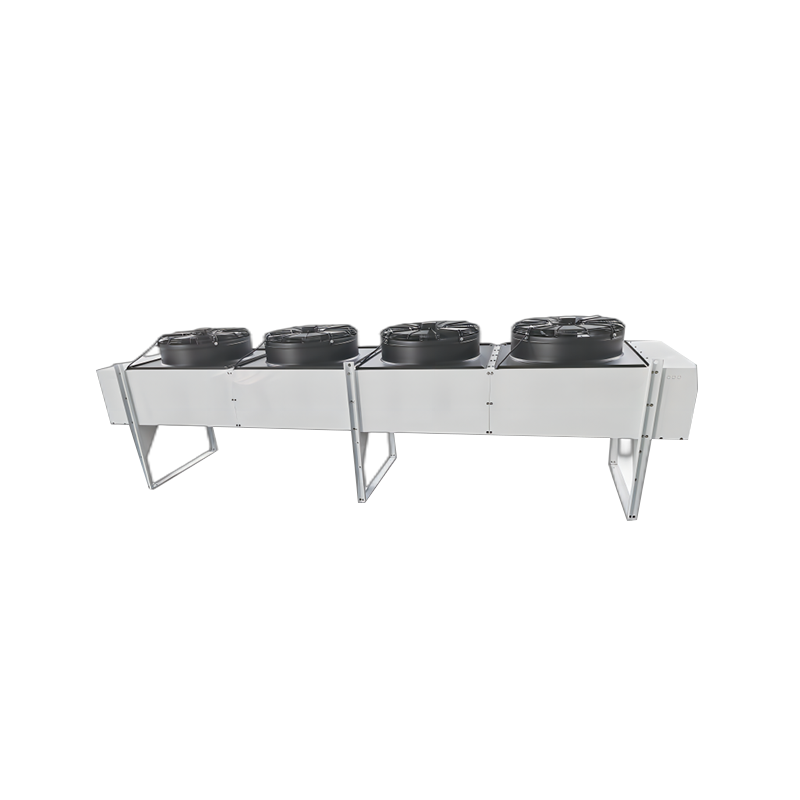
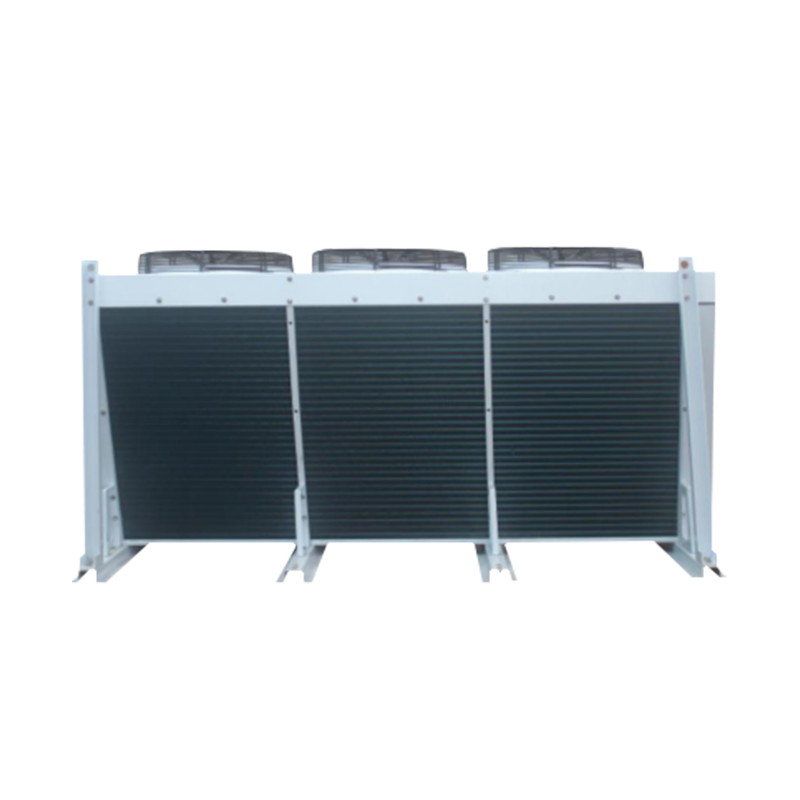
- Condensation: The hot, high-pressure gas flows to the outdoor condenser coil where it releases its heat to the outside air and condenses back into a liquid.
- Expansion: The liquid refrigerant passes through an expansion valve, dropping in pressure and temperature before re-entering the evaporator to restart the cycle.
To put the compressor's energy demand in context: in a typical residential central air conditioning system, the compressor accounts for approximately 70 to 80 percent of the total electrical consumption of the outdoor unit. In a 3-ton (36,000 BTU) residential AC system, the compressor motor alone typically draws 3,000 to 4,000 watts — nearly the same as three or four standard kitchen ovens running simultaneously.
2. How an HVAC Compressor Works Step by Step
An HVAC compressor works by using an electric motor to drive a mechanical compression mechanism that reduces the volume of refrigerant gas, simultaneously raising its pressure and temperature. The specific mechanism varies by compressor type, but the thermodynamic outcome is the same.
Step 1: Suction Stroke
Refrigerant gas at low pressure — typically 60 to 70 psi for R-410A in cooling mode — enters the compressor through the suction line from the evaporator coil. At this stage the gas is slightly superheated above its boiling point to ensure no liquid refrigerant enters the compressor. Liquid refrigerant in the compressor causes a condition called liquid slugging, which can destroy internal components within seconds.
Step 2: Compression
The compressor mechanism — whether pistons, scrolls, or rotary vanes — mechanically reduces the volume of the gas. According to Boyle's Law, reducing the volume of a gas at constant temperature increases its pressure proportionally. In practice the compression also generates significant heat, raising the discharge temperature well above ambient conditions.
Step 3: Discharge
Compressed refrigerant exits the compressor through the discharge line at high pressure (240 to 400 psi for R-410A) and high temperature. This gas immediately travels to the outdoor condenser coil, where a fan forces ambient air across the coil, removing heat from the refrigerant and condensing it into liquid.
Refrigerant Pressure Reference Points
Understanding normal operating pressures helps diagnose problems. For R-410A — the refrigerant used in most residential systems installed between 2010 and 2025 — normal operating pressures at 95 degrees Fahrenheit outdoor temperature are approximately 115 to 125 psi on the low side and 390 to 420 psi on the high side. Significant deviation from these ranges indicates a system fault such as refrigerant undercharge, overcharge, or compressor weakness.
3. Types of HVAC Compressors
There are five main types of HVAC compressors, each suited to different system sizes, efficiency targets, and applications — and the type significantly impacts energy use, noise, and reliability.
Scroll Compressors
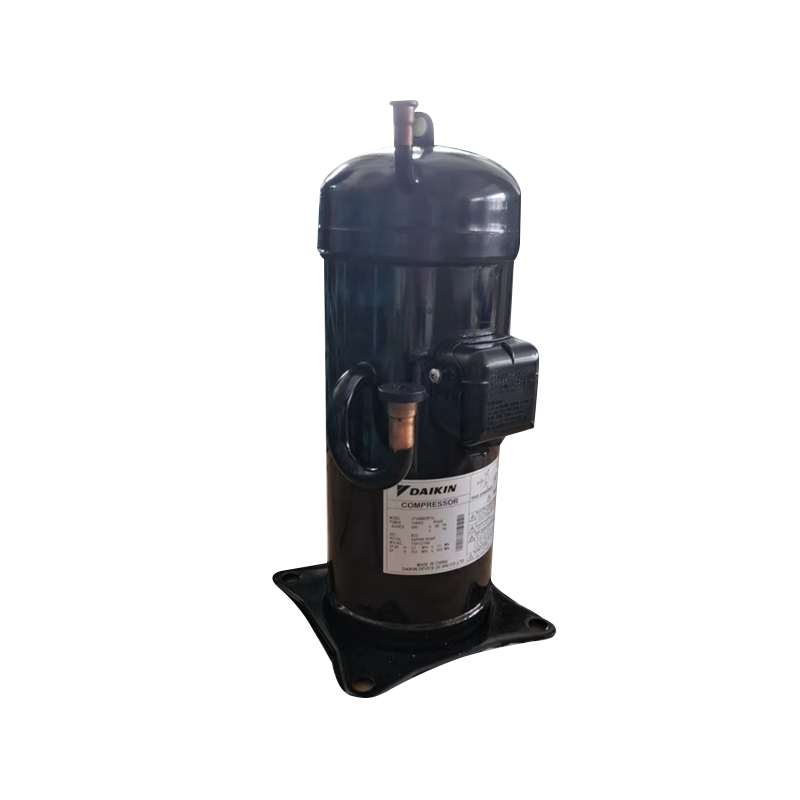
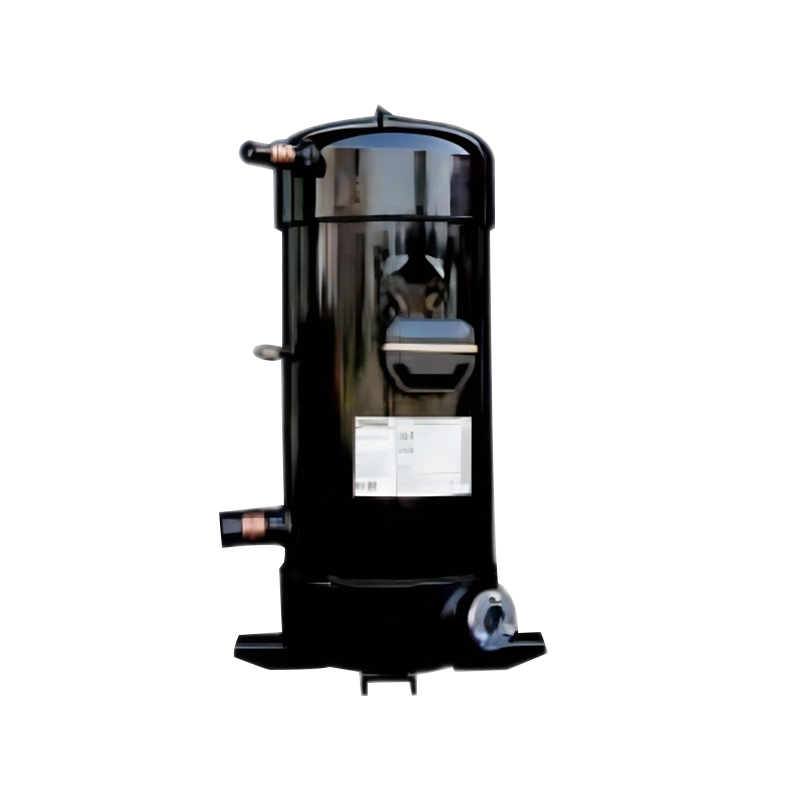
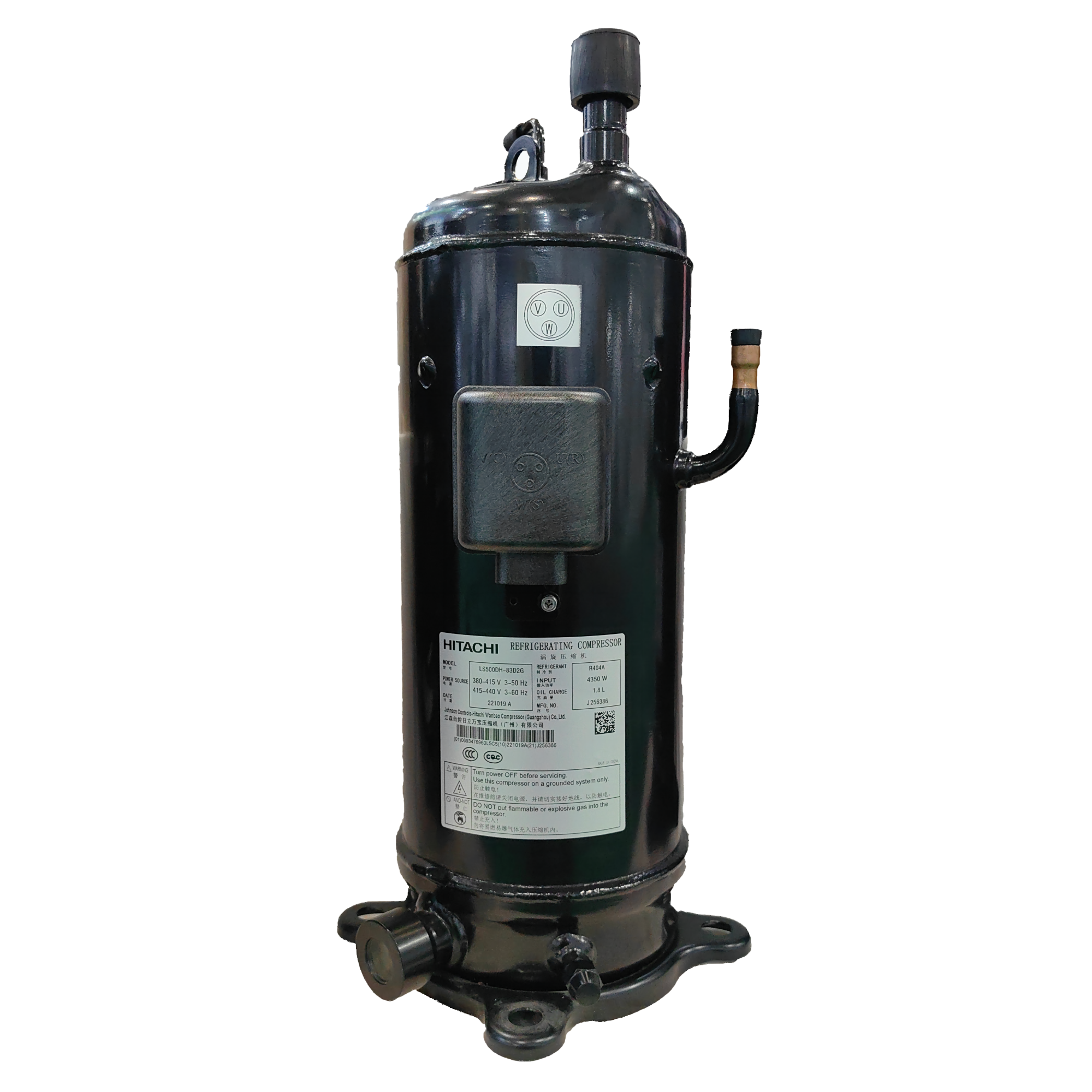
Scroll compressors are the most common type in modern residential and light commercial HVAC systems because of their smooth operation, high efficiency, and compact design. They use two spiral-shaped scrolls — one stationary and one orbiting — to progressively compress refrigerant gas toward the center of the scroll pair. Scroll compressors typically achieve Seasonal Energy Efficiency Ratios (SEER) of 16 to 26+ and operate with minimal vibration. Most residential central air conditioners installed after 2005 use scroll compressors.
Reciprocating (Piston) Compressors
Reciprocating compressors are the oldest and most mechanically straightforward HVAC compressor type, using pistons driven by a crankshaft to compress refrigerant gas in a cylinder. They are robust and can handle a wide range of operating conditions. However, they generate more vibration than scroll types and are less efficient at part-load conditions. They remain common in older systems, window air conditioners, and some commercial refrigeration applications.
Rotary Compressors
Rotary compressors use an eccentric rotor inside a cylinder to compress refrigerant and are most commonly found in small residential units and mini-split systems. They are compact and relatively quiet, making them well-suited for ductless mini-split air conditioners in the 9,000 to 18,000 BTU range. Rotary compressors are simpler than scroll types but less efficient at higher capacities.
Variable-Speed (Inverter-Driven) Compressors
Variable-speed compressors represent the most advanced and energy-efficient HVAC compressor technology available today, using an inverter drive to vary motor speed continuously from as low as 10% to 100% of rated capacity based on real-time demand. Traditional single-stage compressors are either fully on or fully off — they cycle on when temperature rises above the setpoint and off when it drops below. Variable-speed units maintain precise temperature control with far fewer on-off cycles, reducing energy consumption by 30 to 50% compared to single-stage equivalents. They are the defining feature of high-SEER systems rated 18 SEER2 and above.
Centrifugal Compressors
Centrifugal compressors are used exclusively in large commercial and industrial HVAC systems, typically those handling 150 tons (1.8 million BTU) of cooling capacity or more. They use a rotating impeller to accelerate refrigerant gas and then convert that velocity into pressure. Centrifugal compressors are extremely efficient at full load in large chiller applications — achieving Coefficients of Performance (COP) of 5.0 to 7.0 — but are not practical for residential use due to their size and cost.
4. Compressor Role in Cooling vs Heating Mode
In a heat pump system, the compressor performs the same mechanical function in both cooling and heating modes — but the direction of refrigerant flow is reversed by a component called the reversing valve. This is a critical distinction between a standard air conditioner (cooling only) and a heat pump (both cooling and heating).
Cooling Mode
In cooling mode, the compressor draws heat-laden refrigerant vapor from the indoor evaporator coil, compresses it, and sends it to the outdoor condenser where heat is expelled outside. The indoor air loses heat to the refrigerant, lowering the temperature inside the building. The compressor is what makes the outdoor unit hot to the touch during air conditioning operation — it is pumping building heat to the outside.
Heating Mode (Heat Pump)
In heating mode, the refrigerant cycle reverses. The outdoor coil now acts as the evaporator, absorbing heat energy from outdoor air (even at temperatures as low as minus 13 degrees Fahrenheit / minus 25 degrees Celsius in cold-climate heat pumps). The compressor then raises the pressure and temperature of this refrigerant before delivering it to the indoor coil, which now acts as the condenser and releases heat into the building. The compressor makes this heat amplification possible — a well-designed heat pump delivers 2 to 4 units of heat energy for every unit of electrical energy consumed by the compressor, expressed as a Coefficient of Performance (COP) of 2 to 4.
5. Signs Your HVAC Compressor Is Failing
A failing HVAC compressor typically gives several warning signs before complete failure — catching these early can prevent a $1,500 to $2,800 compressor replacement from becoming a $5,000 to $12,000 full system replacement.
- Warm air from supply vents despite AC running: If the system is operating but not cooling, the compressor may be failing to build adequate discharge pressure. A healthy system should cool indoor air by 15 to 20 degrees Fahrenheit across the evaporator coil. If the delta-T (temperature differential) drops below 10 degrees, the compressor is suspect.
- Hard starting or frequent tripping of circuit breakers: A compressor that draws excessive electrical current during startup indicates worn motor windings or a failed start capacitor. The breaker may trip repeatedly as the compressor attempts to start. This is a classic early warning sign.
- Loud clicking, banging, or rattling from the outdoor unit: A healthy scroll compressor is nearly silent aside from the hum of the motor and the fan. Clicking at startup or shutdown is normal, but persistent banging, rattling, or grinding indicates internal mechanical damage — often from liquid slugging or bearing failure.
- Vibration and shaking of the outdoor unit: Excessive vibration when the compressor starts up can indicate a failing hard-start capacitor, loose mounting hardware, or internal scroll damage. Scroll compressors should start smoothly with minimal vibration.
- Higher-than-normal electricity bills: A compressor that is losing efficiency draws more electricity to maintain the same output. A 10 to 15% unexplained increase in summer cooling costs without changes in weather or usage patterns can indicate compressor degradation.
- Oil or refrigerant stains around the outdoor unit: Refrigerant oil is circulated through the system to lubricate the compressor. Visible oily residue or stains on refrigerant lines near the outdoor unit suggests a refrigerant leak, which — if left untreated — leads to compressor failure from loss of lubrication and overheating.
6. Common Causes of HVAC Compressor Failure
The five most common causes of HVAC compressor failure are refrigerant problems, electrical faults, lubrication failure, overheating, and contaminants in the refrigerant circuit. Most compressor failures are preventable with proper maintenance and timely repairs to other system components.
- Refrigerant undercharge (low charge): This is the leading cause of compressor failure in residential systems. Low refrigerant reduces the cooling load on the compressor and also reduces the amount of lubricating oil circulating through the system, leading to overheating and bearing failure. A system that is 10% low on refrigerant uses approximately 20% more energy and significantly shortens compressor life.
- Refrigerant overcharge: Too much refrigerant is equally damaging. Overcharge causes liquid refrigerant to enter the compressor during the suction stroke — a condition called liquid slugging or flooding — which can bend connecting rods, crack valve plates, and destroy the compressor in a single event.
- Electrical failures: Voltage fluctuations, power surges, single-phasing (loss of one power phase in three-phase systems), and capacitor failures are responsible for a significant share of compressor burnouts. A failed start or run capacitor causes the compressor motor to draw excessive current, overheating motor windings within minutes.
- Dirty condenser coils: When the outdoor condenser coil is blocked by dirt, leaves, or debris, the compressor cannot expel heat efficiently. This causes high discharge pressure and high compressor operating temperatures. Extended operation with a dirty condenser raises compressor temperature by 20 to 40 degrees Fahrenheit above normal, cutting compressor life in half in severe cases.
- Acid contamination: Moisture infiltrating the refrigerant circuit reacts with refrigerant and oil to form acids that attack compressor motor windings and internal surfaces. This is especially common after improper service work where the system is opened without proper dehydration protocols.
- Age and normal wear: Most residential HVAC compressors have a designed service life of 10 to 15 years. After 12 to 15 years of operation, internal components wear to the point where compression efficiency drops measurably and failure risk increases sharply. Systems over 15 years old should be evaluated for full replacement rather than compressor-only repair.
7. How to Extend HVAC Compressor Life
Most HVAC compressors that fail prematurely do so because of neglected maintenance on other system components — not because of inherent compressor defects. The following practices reliably extend compressor service life toward or beyond the 15-year mark.
- Annual professional tune-up: A certified HVAC technician should inspect refrigerant charge, measure operating pressures, test electrical components including capacitors and contactors, clean condenser and evaporator coils, and verify airflow across both coils once per year — ideally before the cooling season begins. Annual maintenance reduces compressor failure risk by up to 40% according to industry studies.
- Replace air filters every 1 to 3 months: A clogged air filter restricts airflow across the evaporator coil, causing the coil to ice over and forcing the compressor to operate under abnormally low suction pressure. This is one of the most common causes of avoidable compressor damage.
- Keep the outdoor condenser unit clear: Maintain a minimum of 24 inches of clearance around all sides of the outdoor unit and 48 inches above it. Remove leaves, grass clippings, and debris regularly. Never enclose the unit in decorative screening that restricts airflow.
- Install a surge protector: A dedicated HVAC surge protector (cost: $75 to $150 installed) protects the compressor motor from voltage spikes caused by lightning, utility switching events, and large motor startups on the same electrical circuit. Compressors exposed to unprotected power surges have significantly shorter service lives.
- Address refrigerant leaks immediately: Do not allow a technician to simply recharge a leaking system without finding and repairing the leak. Operating with low refrigerant — even briefly — causes thermal and lubrication damage that accumulates over time. A refrigerant leak repair typically costs $200 to $600, compared to $1,500 to $2,800 for a compressor replacement.
- Use a hard-start kit on aging systems: A hard-start capacitor kit (cost: $50 to $150 installed) reduces the electrical stress on the compressor motor during startup by providing an extra surge of starting torque. On systems 8 years or older, this is one of the most cost-effective life extension measures available.
8. Compressor Replacement vs Full System Replacement
When an HVAC compressor fails, replacing the full system is often more economical than replacing the compressor alone — especially if the system is more than 10 years old or uses a refrigerant that is being phased out.
The decision framework is straightforward. Compare the cost of compressor replacement to the Rule of 5000: multiply the system age in years by the repair cost in dollars. If the result exceeds $5,000, a full replacement is generally the more cost-effective choice. For example, a compressor replacement costing $2,000 in a 9-year-old system gives 2,000 x 9 = 18,000 — well above 5,000 — pointing toward full replacement.
Additional factors that favor full system replacement over compressor-only replacement:
- Refrigerant type: Systems using R-22 (phased out in 2020) cannot be recharged with newly manufactured refrigerant and face rapidly rising service costs. A compressor replacement in an R-22 system simply prolongs operation of an equipment set that cannot be properly maintained long-term.
- System efficiency: A 10-year-old system rated at 13 SEER replaced with a 20 SEER2 variable-speed system reduces annual cooling energy costs by 35 to 45%. At average US residential electricity rates of $0.16 per kWh, this represents savings of $350 to $700 per year for a typical 3-ton system — often recouping the replacement cost within 5 to 7 years.
- Warranty considerations: A new replacement compressor installed in an old system typically carries only a 1-year labor warranty, and the part warranty may be voided if the system uses R-22 or has other underlying issues. A new complete system typically carries a 10-year parts warranty.
9. Comparison Tables
The tables below provide quick reference comparisons for compressor types, failure symptoms, and replacement decisions.
| Compressor Type | Typical Application | Efficiency (SEER Range) | Noise Level | Relative Cost |
| Scroll (single-stage) | Residential central AC | 14 to 18 | Low | Moderate |
| Scroll (variable-speed) | High-efficiency residential / light commercial | 18 to 26+ | Very low | High |
| Reciprocating (piston) | Older residential, window units | 10 to 15 | Moderate to high | Low |
| Rotary | Mini-splits, small AC units | 13 to 20 | Low | Low to moderate |
| Centrifugal | Large commercial chillers (150+ tons) | COP 5.0 to 7.0 | Moderate | Very high |
Table 1: HVAC compressor types compared by application, efficiency rating, noise level, and relative cost.
| Warning Sign | Likely Cause | Urgency Level | Typical Repair Cost |
| Warm air, system running | Low refrigerant or compressor weakness | High | $200 to $600 (leak repair) or $1,500+ (compressor) |
| Breaker tripping repeatedly | Failed capacitor or motor winding issue | High | $150 to $400 (capacitor) or $1,500+ (compressor) |
| Banging or grinding noise | Internal mechanical damage | Critical | $1,500 to $2,800 (compressor replacement) |
| Higher electricity bills | Reduced compressor efficiency | Medium | $80 to $300 (diagnostic and tune-up) |
| Oily stains on refrigerant lines | Refrigerant and oil leak | High | $200 to $600 (leak repair and recharge) |
| Hard starting, vibration | Failing start capacitor | Medium | $150 to $400 (capacitor replacement) |
Table 2: HVAC compressor warning signs, likely causes, urgency level, and typical repair cost ranges for homeowners and technicians.
| Factor | Replace Compressor Only | Replace Full System |
| System age | Under 8 years | Over 10 years |
| Refrigerant type | R-410A or R-32 (current) | R-22 (phased out) |
| Rule of 5000 result | Below 5,000 | Above 5,000 |
| Current system SEER | 16 SEER or above | 13 SEER or below |
| Warranty status | Parts warranty still active | Warranty expired |
| Other components | Coils and air handler in good condition | Multiple aging components |
| Typical cost | $1,500 to $2,800 | $5,000 to $12,000 |
Table 3: Decision framework for choosing between compressor-only replacement and full HVAC system replacement, based on key economic and technical factors.
10. Frequently Asked Questions
Key Takeaways: What the HVAC Compressor Does and Why It Matters
- The compressor is the heart of the HVAC system — it pressurizes refrigerant to drive the entire refrigeration cycle and accounts for 70 to 80% of the outdoor unit's electricity consumption.
- There are five compressor types — scroll, reciprocating, rotary, variable-speed, and centrifugal — each suited to different applications and efficiency targets.
- Variable-speed compressors reduce energy use by 30 to 50% compared to single-stage models by modulating output to match real-time demand.
- Refrigerant undercharge is the leading cause of premature compressor failure — even a 10% undercharge significantly reduces efficiency and lifespan.
- Annual professional maintenance reduces compressor failure risk by up to 40% and is the single most effective investment in system longevity.
- Use the Rule of 5000 to decide between compressor replacement and full system replacement — multiply system age by repair cost to guide the decision.
- Systems over 10 years old using phased-out refrigerant should nearly always be fully replaced rather than repaired when the compressor fails.
 +86-0574-88198229
 +86-17757487298
 Zhejiang Province, Ningbo City, Yinzhou District