
 EN
EN English
 Español
 عربى
عربى русский
In a refrigeration system, the Evaporator is one of the core components for achieving cooling effects. Whether in household refrigerators, commercial cold storage, or large-scale cold chain logistics, the performance of the evaporator directly determines the accuracy of temperature control and energy efficiency ratio. This article will delve into the functions, technical characteristics, and design choices of evaporators in different refrigeration scenarios.
Content
What is an Evaporator? What is its core function?
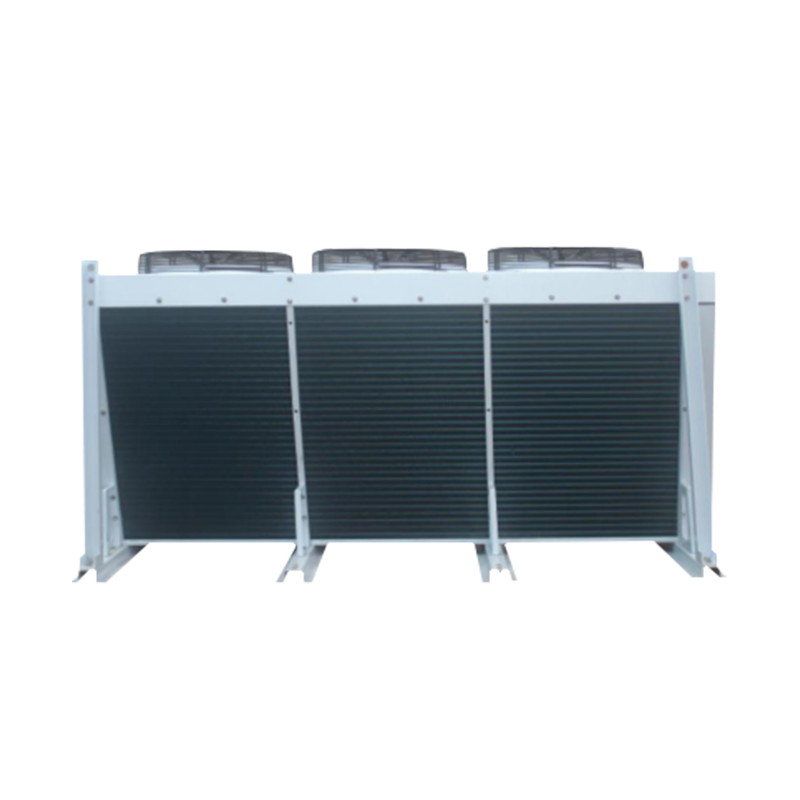
An Evaporator is a heat exchanger whose main function is to vaporize liquid refrigerant under low pressure, thereby absorbing heat from the surrounding environment (air or water) to achieve cooling.
Simply put, the refrigerant flows through the evaporator pipes, exchanging heat with the outside air through the pipe walls and fins. As the refrigerant absorbs heat and changes from a liquid to a gaseous state, the indoor temperature decreases.
Design and Material Characteristics of High-Efficiency Evaporators
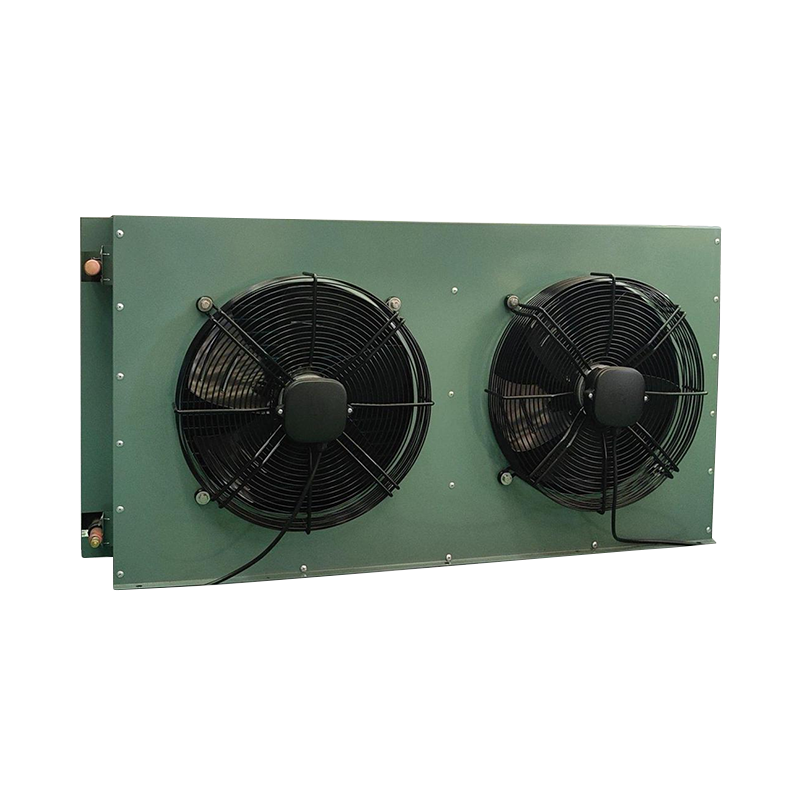
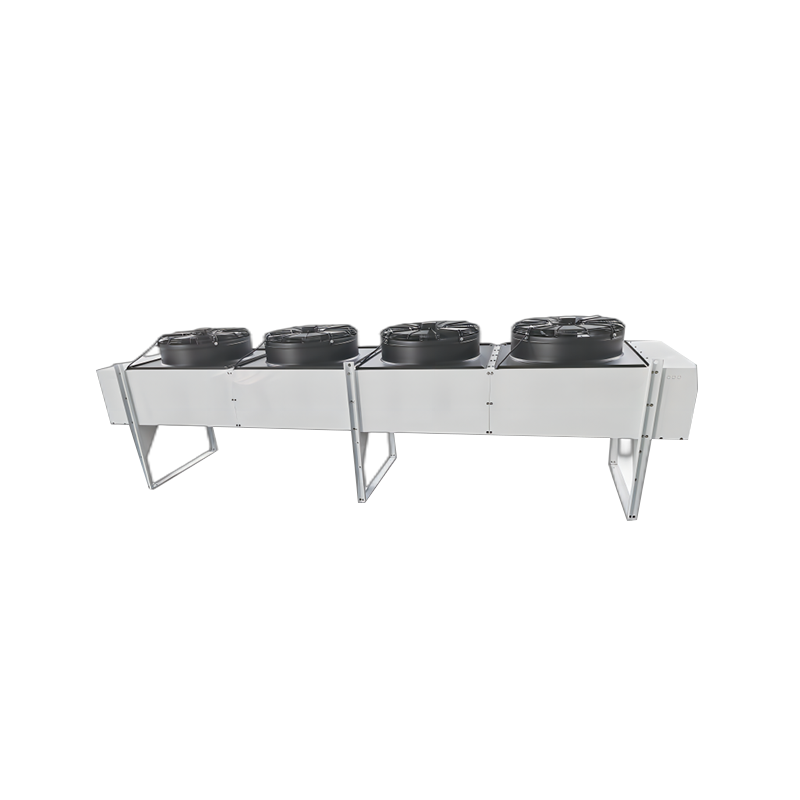
To ensure high heat exchange efficiency and equipment durability, modern industrial evaporators typically employ a tube-fin design. This design maximizes the heat exchange area within a limited space.
1. Material Combination: Copper Tubes and Aluminum Fins
Copper Tubes: Possess excellent thermal conductivity and corrosion resistance, capable of withstanding refrigerant operation under high-frequency pressure fluctuations.
High-Efficiency Aluminum Fins: Aluminum is lightweight and dissipates heat quickly. Through special corrugated or openwork designs, aluminum fins increase air turbulence, significantly improving heat exchange efficiency.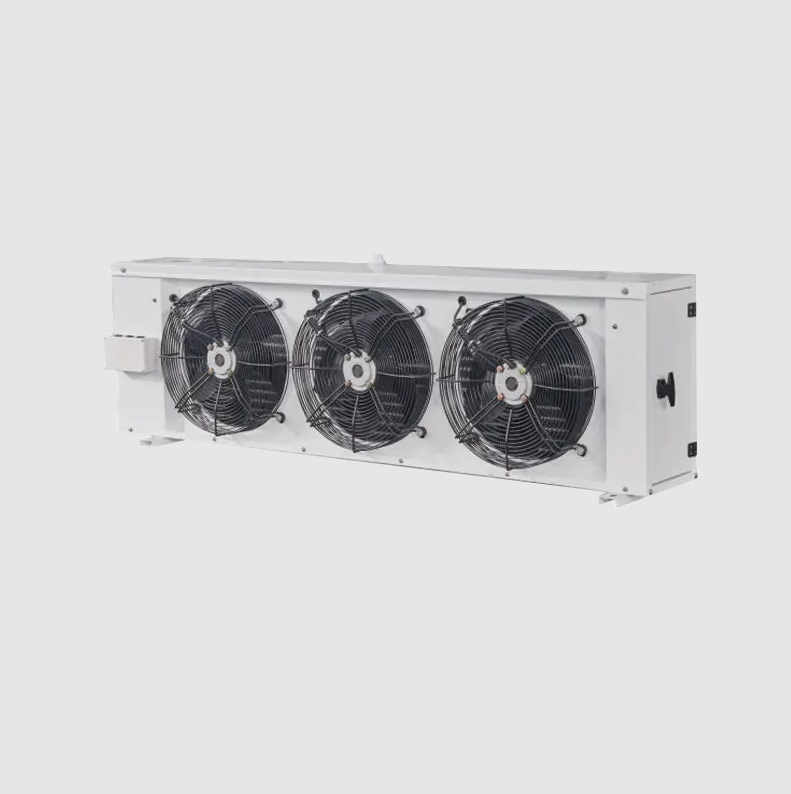
2. Flexible Tube Diameter Selection
Depending on cooling capacity requirements and system flow resistance requirements, evaporators typically offer different tube diameter configurations:
φ9.52mm: Suitable for small to medium-sized refrigeration equipment, with a compact structure.
φ14mm: Suitable for large industrial cold storage, capable of handling larger flow rates and reducing system pressure drop.
Evaporator Series Classification for Different Application Scenarios
In practical applications, evaporator design needs to be optimized according to the target storage temperature to balance heat exchange efficiency and defrost cycle. The following are three main series for different temperature requirements:
UCL Series: Dedicated for freshness preservation (-5℃ to +5℃)
Primarily used for the storage of fruits, vegetables, and fresh flowers. This series is designed with humidity control and precise temperature regulation in mind, effectively extending the shelf life of agricultural products and preventing cell wall damage caused by excessive temperature fluctuations.
UCD Series: Standard Refrigeration (-15℃ to -20℃)
Widely used for refrigeration of meat, poultry, ice cream, and semi-finished foods. This series of evaporators features optimized fin spacing, maintaining refrigeration efficiency at lower temperatures and reducing the impact of frost on airflow.
UCJ Series: Deep Freezing (< -25℃)
Designed specifically for quick-freezing tunnels and long-term deep-freezing warehouses. For extremely low-temperature environments, this series features a strengthened defrosting system design, ensuring stable heat exchange performance under harsh low-temperature conditions and preventing significant reduction in cooling capacity.
How to Choose the Right Evaporator?
When selecting an Evaporator, in addition to considering the materials and temperature range mentioned above, the following design details should also be considered:
Airflow Matching
The fan airflow must match the evaporation area to prevent uneven heat exchange.
Corrosion Resistance
If the environment is humid or contains salt, it is recommended to apply a hydrophilic coating or anti-corrosion treatment to the aluminum fins.
Installation and Maintenance
A well-designed piping layout and removable side panels can significantly reduce later maintenance costs.
As the "refrigeration terminal" of a refrigeration system, the quality of the evaporator directly affects the preservation effect. By adopting efficient tube-fin designs and targeted series classifications (such as UCL, UCD, UCJ), companies can tailor the most energy-efficient and stable cold chain solutions to their specific needs.
 +86-0574-88198229
 +86-17757487298
 Zhejiang Province, Ningbo City, Yinzhou District