
 EN
EN English
 Español
 عربى
عربى русский
When it comes to refrigerators, the compressor is the single most important component — it determines energy efficiency, noise level, cooling performance, and overall lifespan. Choosing a refrigerator without understanding its compressor is like buying a car without looking under the hood. Whether you're replacing an old unit or buying your first refrigerator, the compressor should be at the top of your checklist.
Content
- 1 What Does a Refrigerator Compressor Actually Do?
- 2 The Three Main Types of Refrigerator Compressors
- 3 Why the Compressor Directly Affects Your Electricity Bill
- 4 How Compressor Quality Impacts Food Preservation
- 5 Noise: A Hidden Factor Most Buyers Overlook
- 6 What to Look for When Evaluating a Refrigerator's Compressor
- 7 Common Signs Your Refrigerator Compressor Is Failing
- 8 The Bottom Line: Don't Buy a Refrigerator Without Checking the Compressor
What Does a Refrigerator Compressor Actually Do?
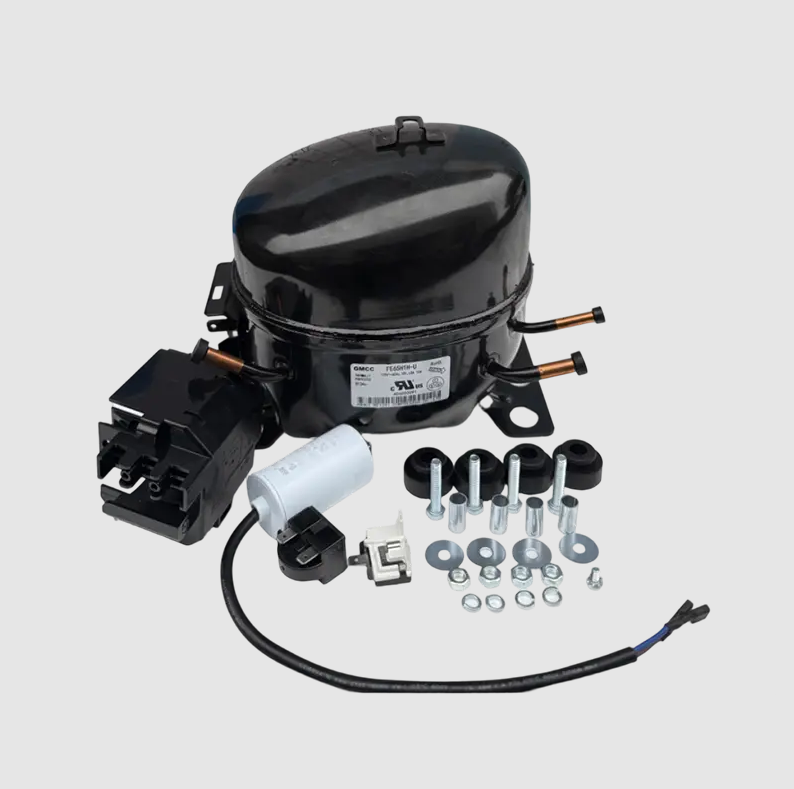
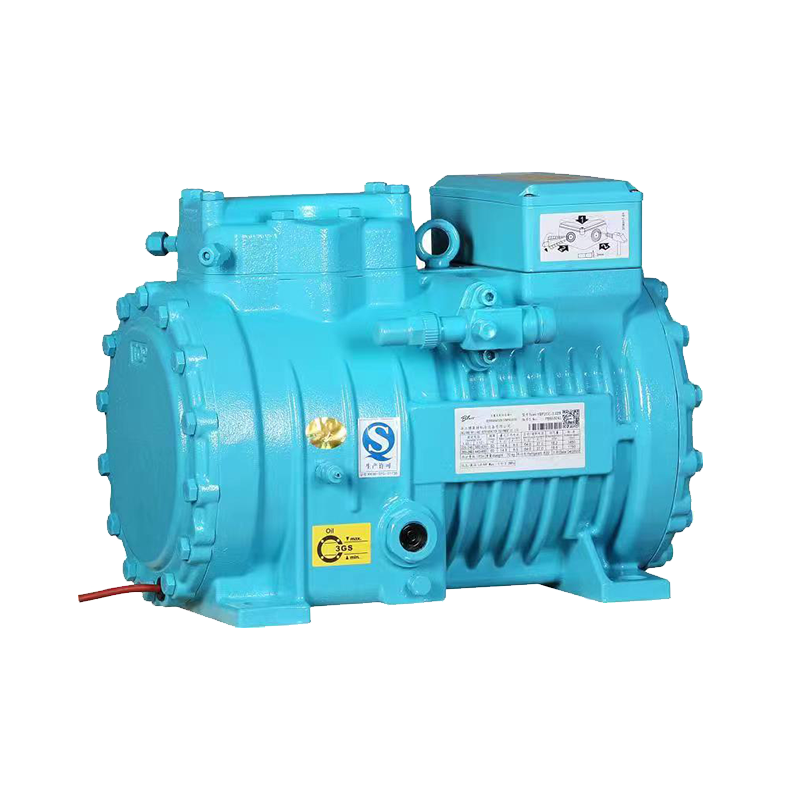
A refrigerator compressor is the engine of the entire cooling system. It compresses refrigerant gas, raising its temperature and pressure, and pumps it through the condenser coils where heat is released. The refrigerant then flows to the evaporator, absorbs heat from inside the fridge, and returns to the compressor to repeat the cycle.
Without a functioning compressor, no cooling occurs at all. It's responsible for maintaining the consistent low temperatures that keep your food fresh and safe. On average, the compressor accounts for 80–90% of a refrigerator's total energy consumption, which is why its design and efficiency matter so much.
The Three Main Types of Refrigerator Compressors
Not all compressors are built the same. There are three primary types used in modern refrigerators, each with distinct advantages and trade-offs.
Single-Speed (Fixed-Speed) Compressor
This is the traditional compressor found in most budget refrigerators. It operates at only one speed — full power — and cycles on and off to maintain temperature. While reliable and simple to manufacture, it tends to consume more energy and generate more noise due to frequent start-stop cycles.
Dual-Speed Compressor
A dual-speed compressor can run at either high or low speed, adjusting based on the cooling load. This provides a modest improvement in energy efficiency compared to single-speed models, as it doesn't always have to operate at full capacity.
Inverter Compressor
The inverter compressor is the most advanced option available in consumer refrigerators today. Instead of cycling on and off, it runs continuously at variable speeds, adjusting its output to match real-time cooling demand. This results in up to 30–50% lower energy consumption compared to fixed-speed models, significantly reduced noise levels, and more stable internal temperatures. Many leading refrigerator models now use inverter compressors as a standard feature.
| Compressor Type | Energy Efficiency | Noise Level | Temperature Stability | Typical Lifespan |
|---|---|---|---|---|
| Single-Speed | Basic | Moderate–High | Fluctuates | 8–12 years |
| Dual-Speed | Moderate | Moderate | Better | 10–14 years |
| Inverter | High | Low | Excellent | 15–20+ years |
Why the Compressor Directly Affects Your Electricity Bill
Refrigerators run around the clock — every day, every year. That constant operation means compressor efficiency has a compounding effect on your energy costs. A traditional single-speed compressor running at full power each cycle draws significantly more electricity than an inverter model that throttles down during low-demand periods.
For example, a standard 400-liter refrigerator with a fixed-speed compressor might consume 450–500 kWh per year. An equivalent model with an inverter compressor could consume as little as 250–300 kWh annually — a difference that adds up to substantial savings over a 10-year period. When evaluating refrigerators, always check the annual energy consumption label, not just the star rating.
How Compressor Quality Impacts Food Preservation
Temperature consistency is critical for food safety. Every time a traditional compressor cycles off, the internal temperature begins to rise slightly before the compressor kicks back in. Over time, these minor fluctuations affect food quality and can accelerate spoilage.
An inverter-based refrigerator compressor maintains a much narrower temperature band — often within ±0.5°C of the target setting, compared to fluctuations of ±2–3°C seen in fixed-speed models. This matters especially for:
- Fresh produce and leafy vegetables that wilt quickly with temperature swings
- Dairy products sensitive to temperature variation
- Medicines and insulin that require strict cold-chain maintenance
- Frozen items that can develop ice crystals from repeated thaw-refreeze cycles
Noise: A Hidden Factor Most Buyers Overlook
One of the most overlooked aspects of a refrigerator compressor is the noise it produces. Fixed-speed compressors produce noticeable sound spikes each time they start — often in the range of 42–48 dB. For open-plan kitchens or studio apartments, this can be genuinely disruptive.
Inverter compressors, by contrast, run at variable low speeds most of the time, keeping noise levels at or below 35–38 dB — roughly equivalent to a quiet library. If you're sensitive to background noise or your refrigerator is adjacent to a living space, choosing a model with an inverter refrigerator compressor makes a noticeable real-world difference.
What to Look for When Evaluating a Refrigerator's Compressor
When shopping for a new refrigerator, the compressor specification is usually buried in the technical details — but it's worth seeking out. Here's what to evaluate:
- Compressor type: Look specifically for "inverter compressor" in the product specifications. This is the most reliable indicator of long-term efficiency and quiet operation.
- Warranty coverage: Many manufacturers offer longer warranties specifically on the compressor — 10-year compressor warranties are a strong signal of confidence in the component's quality.
- Noise rating (dB): Check the official noise specification. Anything below 40 dB is considered quiet; below 35 dB is excellent.
- Annual energy consumption (kWh/year): This figure accounts for the compressor's efficiency across real usage patterns. Compare models of the same capacity using this number.
- Refrigerant type: Modern compressors using R-600a (isobutane) refrigerant are both more environmentally friendly and more thermodynamically efficient than older R-134a systems.
Common Signs Your Refrigerator Compressor Is Failing
A failing compressor is one of the most costly repairs a refrigerator can require. Recognizing early warning signs can help you act before food spoils or a small issue becomes a full replacement:
- Refrigerator not cooling adequately despite the thermostat being set correctly
- Compressor running constantly without cycling down, causing the unit to feel warm on the outside
- Unusual clicking, buzzing, or humming noises coming from the back or bottom of the unit
- Electricity bill rising noticeably without any change in usage habits
- Fridge restarting with a loud jolt, suggesting difficulty starting the motor
If your refrigerator is more than 10 years old and the compressor shows signs of failure, replacing the entire unit is often more economical than a compressor repair, which can cost nearly as much as a new entry-level model.
The Bottom Line: Don't Buy a Refrigerator Without Checking the Compressor
The refrigerator compressor is not a minor technical detail — it is the defining factor in how efficiently, quietly, and reliably your refrigerator performs over its lifetime. An inverter compressor is the gold standard for any household that values energy savings, consistent food preservation, and low-noise operation.
Before your next purchase, take two minutes to look up the compressor type, noise rating, and annual energy figure. These three data points will tell you more about a refrigerator's long-term value than its exterior finish or number of shelves ever could.
 +86-0574-88198229
 +86-17757487298
 Zhejiang Province, Ningbo City, Yinzhou District